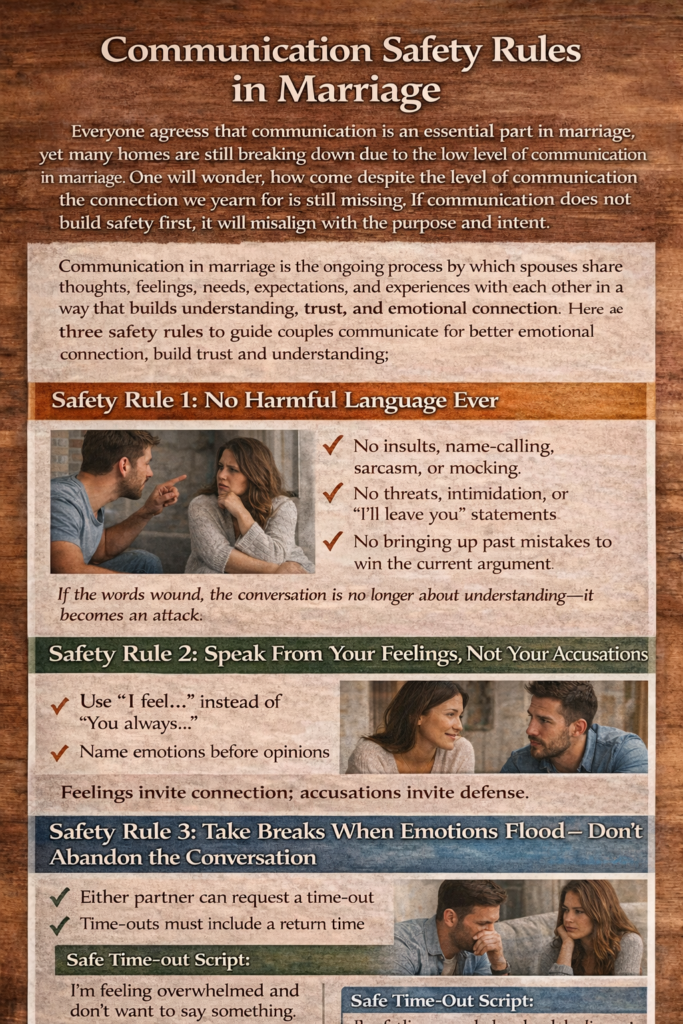
COMMUNICATION SAFETY RULES IN MARRIAGE
Everyone agrees that communication is an essential part in marriage, yet many homes are still breaking down due to the low level of communication in marriage. One will wonder, how come despite the level of communication the connection we yearn for is still missing. If communication does not build safety first, it will misalign with the purpose and intent.
Communication in marriage is the ongoing process by which spouses share thoughts, feelings, needs, expectations, and experiences with each other in a way that builds understanding, trust, and emotional connection.
It is not just talking it includes listening, interpreting, responding, and emotionally attuning to one another.
Here are three safety rules to guide couples communicate for better emotional connection, build trust and understanding;
Safety Rule 1: No Harmful Language Ever
Principle:
If the words wound, the conversation is no longer about understanding it becomes an attack.
What this means in practice:
No insults, name-calling, sarcasm, or mocking
No threats, intimidation, or “I’ll leave you” statements
No bringing up past mistakes to win the current argument
Why this matters:
Harsh language activates the brain’s threat system (fight,flight, freeze or fawn response), making emotional safety impossible. Once safety is lost, listening shuts down
Safety Rule 2: Speak From Your Feelings, Not Your Accusations
Principle:
Feelings invite connection; accusations invite defense.
What this means in practice:
Use “I feel…” instead of “You always…”
Name emotions before opinions
Talk about impact, not character
Unsafe Language Example:
“You don’t care about me.”
Safe Language Version:
“I feel lonely and unimportant when we don’t talk.”
Why this matters:
Accusations trigger shame and defensiveness. Emotional ownership keeps the nervous system regulated and the conversation open.
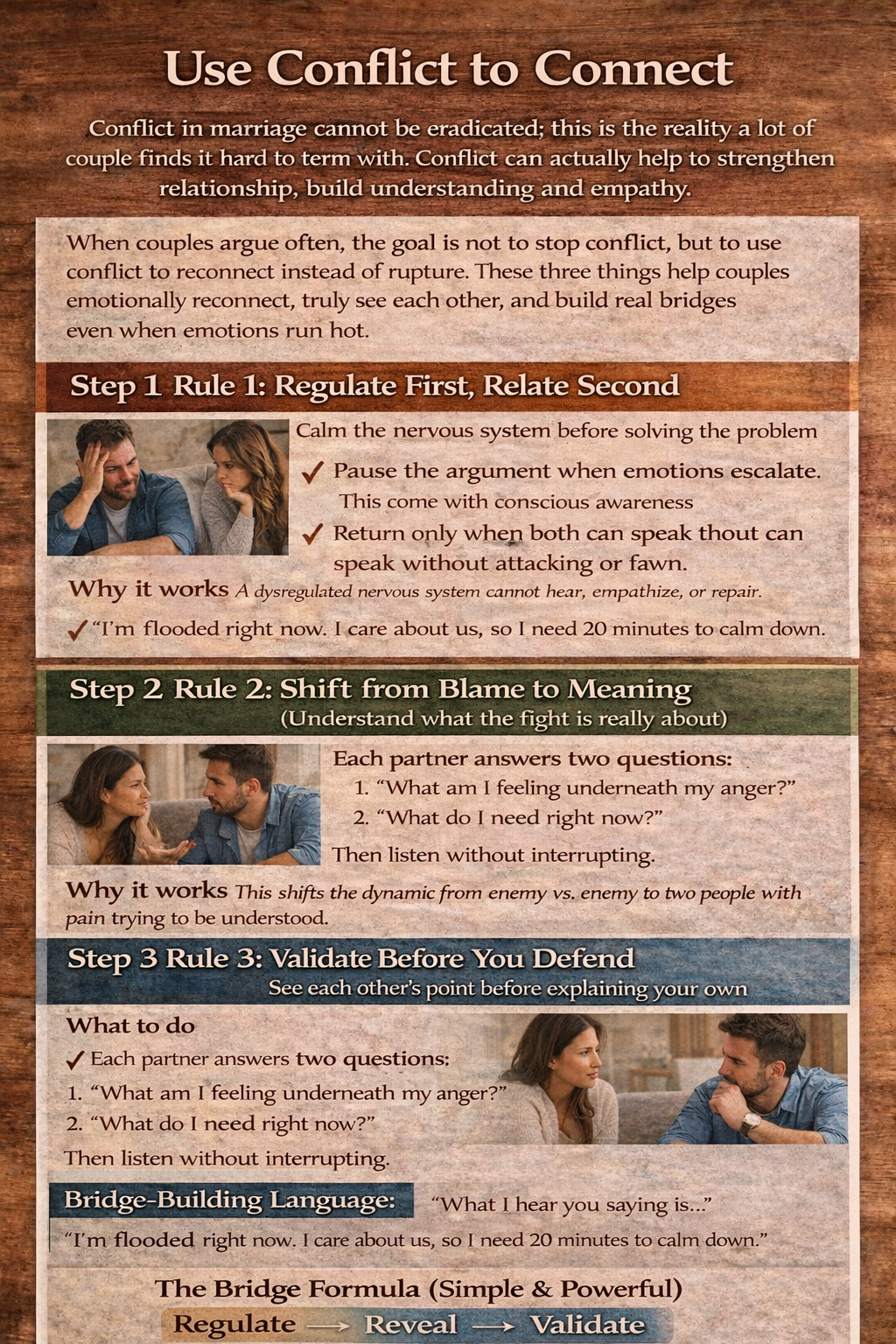
Safety Rule 3: Take Breaks When Emotions Flood — Don’t Abandon the Conversation
Principle:
Pausing is protection, not avoidance.
What this means in practice:
Either partner can request a time-out
Time-outs must include a return time
No storming off, silent treatment, or emotional withdrawal
Safe Time-Out Script:
I’m feeling overwhelmed and don’t want to say something hurtful.
Let’s take 20 minutes and come back at 7:30.
Why this matters:
Emotional flooding shuts down reasoning. Breaks allow the nervous system to reset so the conversation can continue safely.
As a couple, we can choose safety over winning, connection over control and repair over punishment.