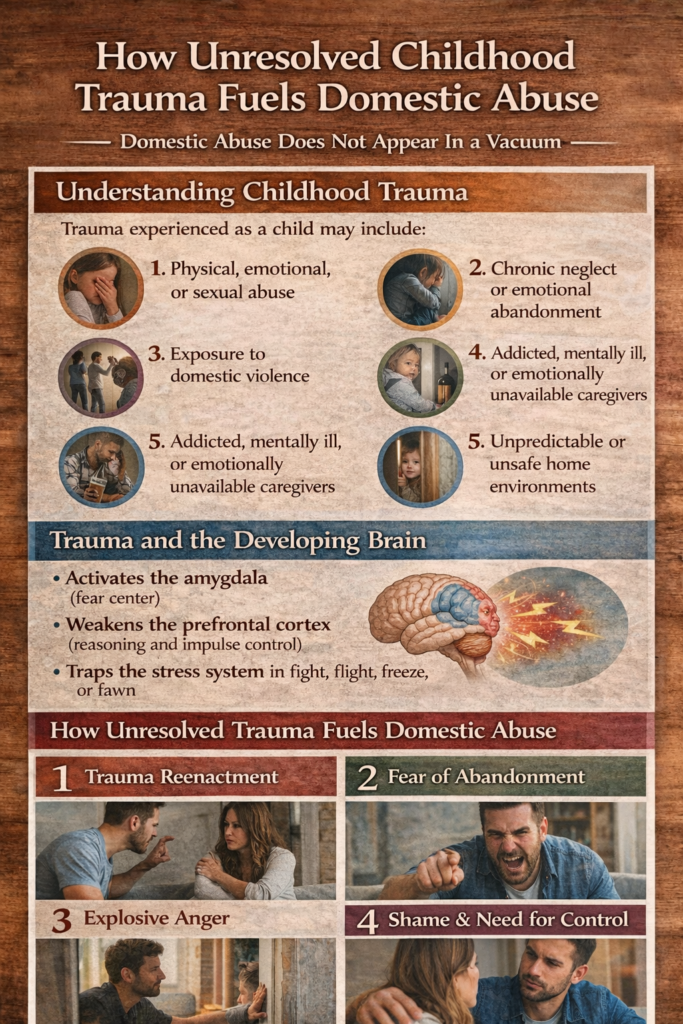
HOW UNRESOLVED CHILDHOOD TRAUMA FUELS DOMESTIC ABUSE
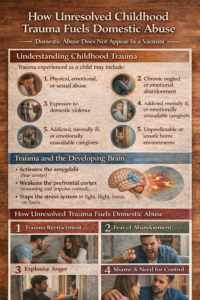
Domestic abuse does not appear in a vacuum. While abuse is always a choice and perpetrators must be held accountable many abusive patterns are rooted in unresolved childhood trauma. When early wounds go unhealed, they can silently shape adult relationships, turning intimacy into a battleground and love into control, fear, or harm.
Understanding this connection is not about justifying abuse. It is about interrupting the cycle, protecting survivors, and addressing the deeper psychological roots that allow violence to repeat across generations.
Understanding Childhood Trauma
Childhood trauma refers to overwhelming experiences in early life that exceed a child’s ability to cope. These may include:
1. Physical, emotional, or sexual abuse
2. Chronic neglect or emotional abandonment
3. Exposure to domestic violence
4. Growing up with a caregiver who was addicted, mentally ill, or emotionally unavailable
5. Unpredictable or unsafe home environments
Because children depend on caregivers for survival, trauma is often internalized, not processed. The child adapts by developing survival strategies hypervigilance, emotional numbing, people-pleasing, aggression, or withdrawal. These adaptations may keep the child safe then, but they often become destructive patterns in adult relationships.
TRAUMA AND THE DEVELOPING BRAIN
Childhood trauma reshapes the nervous system and brain development:
The amygdala (fear center) becomes overactive, constantly scanning for threats
The prefrontal cortex (reasoning and impulse control) may be underdeveloped
The stress response system becomes stuck in fight, flight, freeze, or fawn
As adults, trauma survivors may react to minor relational stress as if their survival is at stake. This can lead to intense emotional reactions, impulsive behavior, and difficulty regulating anger or fear which breed fertile ground for abusive dynamics.
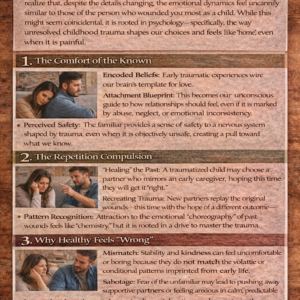
HOW UNRESOLVED TRAUMA FUELS DOMESTIC ABUSE
1. Trauma Reenactment
Unresolved trauma often seeks familiarity, not safety. Adults may unconsciously recreate childhood dynamics in intimate relationships either by assuming the role of the powerless child or the controlling adult.
a) A child who felt helpless may become controlling to avoid vulnerability
b) A child who grew up witnessing violence may normalize aggression as “love”
2. Fear of Abandonment and Control
Many survivors of childhood trauma live with deep abandonment wounds. In adult relationships, this can manifest as:
a) Extreme jealousy
b) Monitoring a partner’s movements
c) Emotional manipulation
d) Isolation of a partner from friends or family
Control becomes a misguided attempt to prevent abandonment. When fear drives behavior, love can turn into obsession and possession.
3. Emotional Dysregulation and Explosive Anger
Trauma disrupts the ability to self-soothe. Without emotional regulation skills, distress can quickly escalate into rage.
Minor conflicts feel intolerable, anger becomes overwhelming and unmanageable and violence or intimidation is used to discharge emotional pain. This is not “anger issues” alone it is unprocessed trauma erupting through the body.
4. Shame, Power, and Projection
Unresolved trauma often carries profound shame: “I am broken,” “I am unlovable,” “I am weak.” Rather than facing this pain, some individuals externalize it by becoming abusive. A partner becomes the container for their self-hatred, blame is projected: “You made me do this” and Power and domination temporarily mask inner worthlessness. Abuse becomes a way to feel powerful instead of powerless.
WHY TRAUMA NEVER EXCUSES ABUSE
It is critical to be clear: trauma explains behavior; it does not excuse it. Many people experience childhood trauma and never become abusive. Abuse is a choice reinforced by beliefs, social norms, entitlement, and refusal to seek healing. Accountability must remain central. Survivors of abuse are never responsible for the trauma of their abuser.
THE INTERGENERATIONAL CYCLE OF ABUSE
Without intervention, trauma is often passed down:
a) Abused children may become abusive adults
b) Children who witness domestic violence may normalize it
c) Silence, denial, and stigma protect the cycle
Breaking this cycle requires awareness, accountability, and trauma-informed support.
FOR INDIVIDUALS WITH TRAUMA HISTORIES
a) Trauma-informed therapy
b) Learning emotional regulation and nervous system skills
c) Developing accountability without shame
d) Rewriting beliefs about power, intimacy, and conflict
Healing trauma reduces the internal chaos that fuels abusive behavior.
FOR SURVIVORS OF DOMESTIC ABUSE
a) Safety planning and support networks
b) Trauma-informed counseling
c) Reclaiming autonomy and self-worth
d) Understanding that love does not require suffering
Healing for survivors is about restoring safety, dignity, and choice.
FINAL THOUGHTS
Unresolved childhood trauma can quietly shape adult relationships, turning unhealed pain into control, fear, and harm. Domestic abuse is not simply about anger it is often about unprocessed terror, grief, and shame seeking expression.
When trauma is named, addressed, and healed, cycles can be broken. Homes can become safe. Love can become secure. And future generations can grow without inheriting wounds they did not create