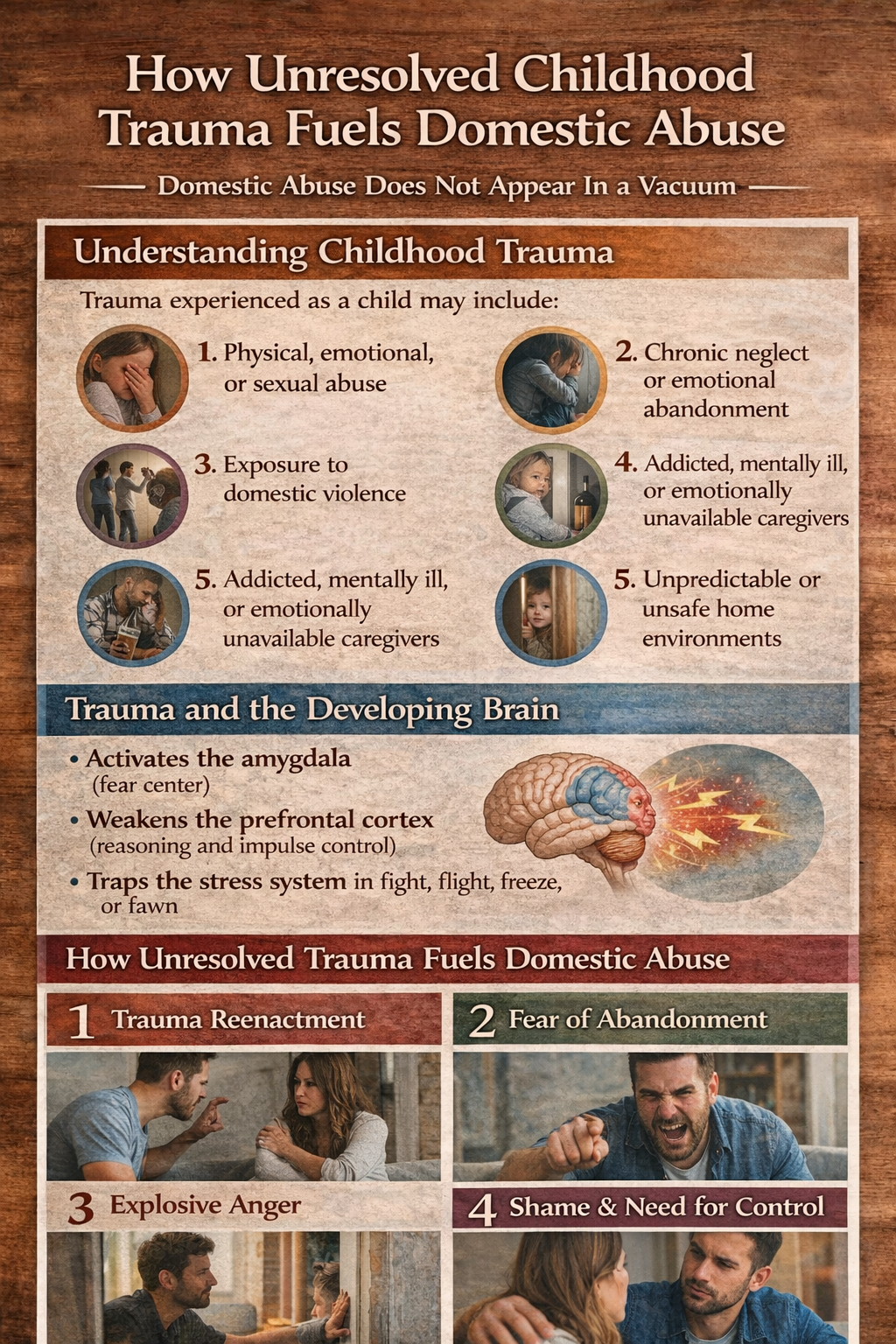
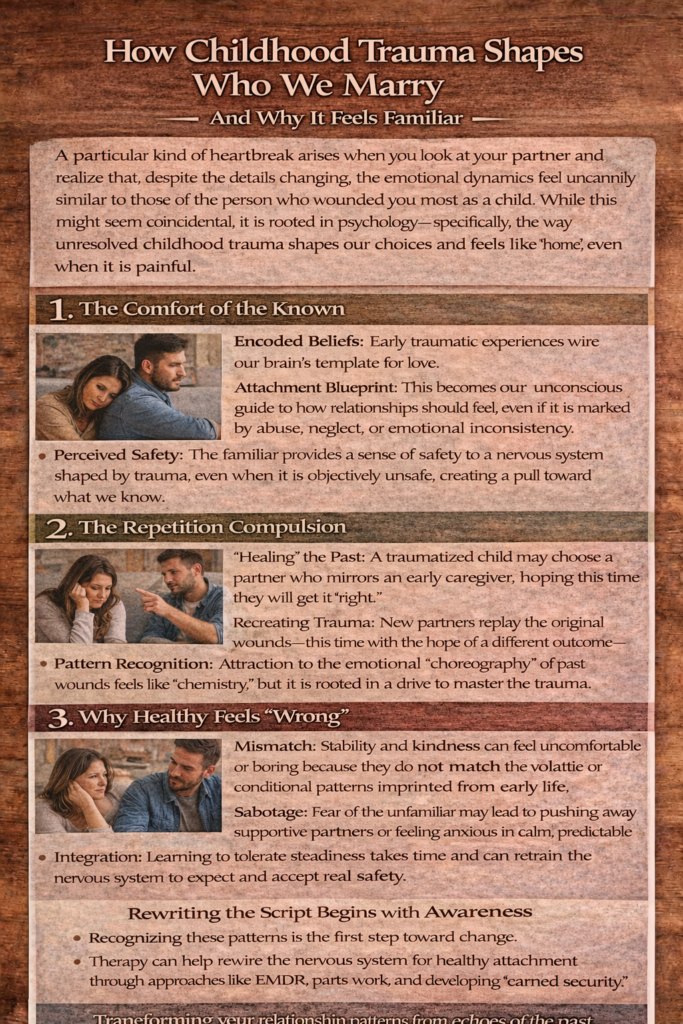
HOW CHILDHOOD TRAUMA SHAPES WHO WE MARRY (AND WHY IT FEELS FAMILIAR)
There’s a particular kind of heartbreak that comes with looking at your partner across the breakfast table and realizing you’ve married someone who reminds you of the very person who hurt you most as a child. It’s not always obvious at first. The details are different. The circumstances have changed. But the emotional choreography feels strangely rehearsed, like a dance you learned long ago when you were too young to know you were learning it.
This isn’t coincidence, and it certainly isn’t fate. It’s psychology. And understanding why we’re drawn to what feels familiar—even when familiar means painful—might be one of the most important journeys we can take.
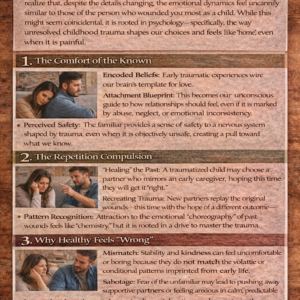
The Comfort of the Known
Human beings are pattern-seeking creatures. Our brains are wired to recognize patterns because patterns helped our ancestors survive. The rustle in the grass that meant a predator. The change in weather that signaled the seasons. And yes, the emotional rhythms of the people who raised us.
When we experience trauma in childhood—whether it’s overt abuse, neglect, emotional unavailability, or the thousand small wounds that accumulate over time—our developing brains encode these experiences as our template for love. Not because we want them to be, but because they are. They become our baseline, our reference point, our definition of normal.
This creates a paradox that confuses many people: Why would anyone seek out a relationship that replicates pain? The answer is that we’re not consciously seeking pain. We’re seeking familiarity. And to a nervous system shaped by trauma, familiarity equals safety, even when the familiar thing is objectively unsafe.
The Unconscious Pull Toward What We Know
Attachment theory, developed by psychologist John Bowlby and expanded by Mary Ainsworth, helps explain this phenomenon. Our earliest relationships—typically with parents or primary caregivers—create what researchers call “internal working models” of relationships. These models become the blueprint we unconsciously follow in adult partnerships.
If you grew up with a parent who was inconsistently available, you might find yourself drawn to partners who are emotionally distant or unpredictable. If you experienced criticism and conditional love, you might choose someone who withholds approval. If you had to earn affection through performance or caretaking, you might seek out partners who need rescuing.
The attraction often happens below the level of conscious awareness. You meet someone and feel an immediate spark, a sense of “chemistry” or “just knowing.” What you’re actually recognizing is the emotional signature of your earliest wounds. Your system is saying, “Yes, this feels like home.” It doesn’t ask whether home was safe.
The Repetition Compulsion
Sigmund Freud identified what he called the “repetition compulsion”—the tendency to recreate painful experiences in an unconscious attempt to master them. It’s as if some part of us believes that if we can just replay the original trauma with a different ending, we can finally heal it.
So the daughter of an alcoholic father might marry someone with addiction issues, unconsciously hoping that this time, love will be enough to make them stop drinking. The son of a critical mother might partner with someone equally judgmental, hoping that this time, he can finally be good enough to earn unconditional acceptance. The child who was abandoned might choose someone emotionally unavailable, hoping that this time, they can make someone stay.
The problem is that we’re trying to solve an old equation with new people, and it rarely works. The variables have changed, but we’re still using the same formula.
Why Healthy Feels Wrong
This is perhaps the cruelest twist: when someone who’s experienced childhood trauma encounters a genuinely healthy, stable, emotionally available partner, it often feels wrong. Boring. Lacking in chemistry. Too nice.
What’s actually happening is that the relationship doesn’t match the template. The nervous system, calibrated to chaos or pain or emotional distance, doesn’t know how to interpret steadiness. Kindness without strings attached feels suspicious. Reliability might even feel suffocating because it’s so unfamiliar.
Many people in this situation find themselves sabotaging healthy relationships or feeling inexplicably anxious when things are going well. They’re not broken or ungrateful. They’re experiencing what happens when your past and your present are speaking different languages.
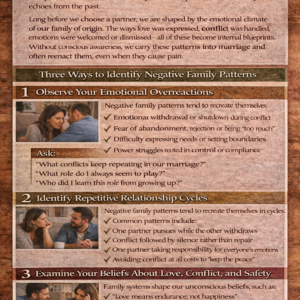
The Path Forward
Recognizing these patterns is the first step, but it’s not a comfortable one. It requires looking honestly at your relationship history and asking difficult questions: What keeps showing up? What role do I typically play? What feels familiar, and is familiar actually serving me?
This kind of self-examination often benefits from professional support. Therapy—particularly approaches like EMDR, Internal Family Systems, or psychodynamic therapy—can help you identify and rewire these deep-seated patterns. The goal isn’t to blame your parents or to wallow in the past, but to understand how the past lives in your present so you can make different choices.
It’s also important to develop what therapists call “earned security.” This means consciously learning what healthy attachment looks like, even if you didn’t experience it as a child. It means practicing tolerating the discomfort of being treated well. It means staying in relationships that feel safe even when your nervous system is screaming that something must be wrong.
Rewriting the Script
The good news—and there is good news—is that these patterns aren’t permanent. The brain’s neuroplasticity means we can create new neural pathways, new templates, new definitions of love and safety. It takes time, intention, and often support, but it’s absolutely possible to break the cycle.
You might not be able to change what happened to you as a child, but you can change what you allow into your life as an adult. You can learn to recognize the difference between chemistry and compatibility, between what feels familiar and what’s actually good for you. You can develop the capacity to sit with the discomfort of healthy love until it becomes your new normal.
The person you marry doesn’t have to be an echo of your wounds. They can be the beginning of your healing instead. But first, you have to be willing to question why certain echoes feel like home in the first place.
If you’re recognizing yourself in these patterns and feeling overwhelmed, please consider reaching out to a mental health professional who specializes in trauma and attachment. Healing is possible, and you don’t have to do it alone.